Current page
[CEO Dialogue] Do you know how ZAIKO was born? | Marek Nassar (ZAIKO) × Sachi Job (iFLYER)
News
Creator stories
Product updates

The electronic ticket platform ZAIKO was born on January 11, 2019. While the name has now become widely recognized, the details of its origin might not be as well known.
Hence, we asked Marek Nasser (photo right), the CEO of ZAIKO, and Sachi Job (photo left), the CEO of the club music information media iFLYER, to share how ZAIKO came into existence!
ZAIKO was born from iFLYER
ZAIKO Editorial Team:
Please tell us how ZAIKO was founded.
Marek:
ZAIKO was born by independent and separate ticket sales functions from the music media iFLYER. Sachi and I are also the founders of iFLYER. iFLYER had established excellent technology for ticket sales, but could only sell tickets for the events listed on iFLYER. So it was brought up that we wanted to handle events in genres not covered by iFLYER.
Sachi:
Initially, we started with a simple service called iFLYER Ticket, but it limited the events we could sell tickets for to only club music, which I thought had its limits. After several discussions, we came up with the idea to launch the current ticket sales service.

ZAIKO Editorial Team:
I see. When you separate the company, you have to decide on a name, right? The name ZAIKO is quite unique; what is its origin?
Marek:
We all agreed that naming is important, and while considering the direction, we wanted a word that has no excessive meaning and is, in a sense, "dry". At that time, COO Lauren (Rose Coker) suddenly said the word "Zaiko", and I thought it was great.
It has a feeling of having stock for live events, which is unique and reminiscent of Japan.
For us Westerners, it sounds cool, strong, and powerful. Although "zaiko" may not necessarily be a positive word in Japanese, we were excited about the idea of changing that image ourselves and creating a brand.
As a side note, I later learned that in Hungarian, it means rabbit (laughs).
iFLYER enters the electronic ticket market
ZAIKO Editorial Team:
Earlier you mentioned that "iFLYER had established excellent technology for ticket sales"; when did you start handling electronic tickets with iFLYER?
Marek:
It was in 2010. The first event to introduce electronic tickets was the "Rainbow Disco Club".
Sachi:
You could say it began by building an electronic ticket system specifically for "Rainbow Disco Club". This is because iFLYER works closely with clients (artists and event organizers) and often incorporates suggestions and opinions from them into the development. The electronic ticketing also started from that kind of background.

Marek:
Initially, we considered digitalizing the guest list using QR codes. Checking a paper guest list is quite a hassle, right?
ZAIKO Editorial Team:
So, electronic guest list means that when the QR code created for guest A is scanned at the entrance, the system recognizes "A has arrived", correct? That is indeed efficient.
Marek:
That's right. So the idea of digitalizing the guest list came about, but then we thought, why not digitalize the tickets themselves? In terms of QR code-based electronic tickets, I believe we can say we were pioneers.
Sachi:
At that time, there were a few conferences and electronic ticket services for business, but none were specialized for the music industry, so we were a trailblazer in that field.
Marek:
However, back then, it was still a time when people were asking "What’s a QR code?", so it took time to become widespread.

ZAIKO Editorial Team:
Was iFLYER originally established for ticket sales?
Marek:
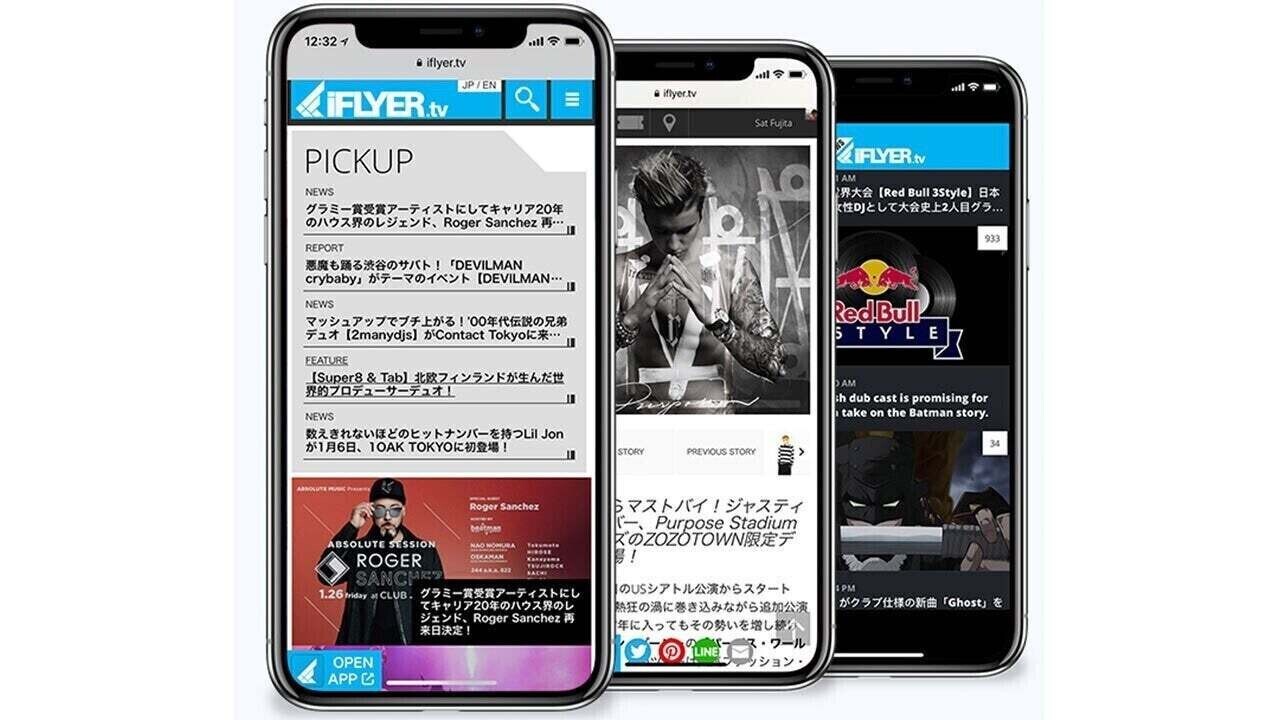
No, it was initially established as a site where event information could be posted. This was in 2006. It was accessible to everyone, allowed anyone to create event pages, included artist information, and allowed for editing... It was hard to explain back then, but now it can easily be described as "like Wikipedia".
Sachi:
As we operated, we thought the next step was to sell tickets. It would be convenient for users to search for events and buy tickets there.
Marek:
However, at that time, it was still rare to sell tickets for club events in advance, so we gradually worked to spread the word by going around to clubs.
Sachi:
At first, I was told, "No one will buy advance tickets for clubs. Even for big artists, only about 5 to 10 tickets sell. It would be pointless to do this." However, I knew that ticket culture was established abroad and that ticket culture was starting to advance in the Japanese music scene as well, so I conveyed my desire to challenge this.
Indeed, it took time for the habit of buying advance tickets to settle in Japan, but club industry customers gradually got used to buying tickets, and changes started to occur slowly. The music industry changed, customers' awareness changed, and at the same time, the way events were organized and PR plans also transformed.
ZAIKO Editorial Team:
Speaking of iFLYER, it's also known for handling electronic tickets for the Fuji Rock Festival. How did that initiative start?
Sachi:
In 2013, we approached them asking if we could handle press lists operations. That is, the media version of the guest list we talked about earlier. We thought we would start small... but it took a whole year of negotiations before it finally materialized the following year.
I remember spending more time explaining what QR codes were rather than explaining the iFLYER ticket system when we first met. After that, I received a polite email acknowledging that it was a wonderful system but that it felt like it was too ahead of its time.
Marek:
It started from small things like that, and fortunately, there were no major problems, and it was used comfortably, so we gradually expanded our initiatives year by year. It's all about steady effort.
What lies ahead for iFLYER and ZAIKO

ZAIKO Editorial Team:
What does the future hold for iFLYER?
Marek:
iFLYER is an important client of ZAIKO (laughs). That said, iFLYER will focus on the media business. Initially launched as a media company, we are considering collaborations with ticketing systems, but through this separation, we will refocus on the core media.
Sachi:
ZAIKO has a solid infrastructure for customer support regarding ticketing, so we were able to separate with confidence.
Marek:
Our ideal at ZAIKO is to create a user-friendly system that can be utilized equally by large and small event organizers, artists, and media, benefiting from databases and technology.
ZAIKO Editorial Team:
Finally, as the CEO, what kind of company do you want to make ZAIKO in the future?
Marek:
I have been active as an entrepreneur since before starting iFLYER, but at ZAIKO, I definitely want to do things that we couldn't do before. That is, the idea that all staff own the company together.
For example, it will involve stock options, where everyone holds shares and collaborates in building the company and deciding the direction. Furthermore, I want to incorporate various opinions and be an innovative and unique presence in the industry.
While I wanted to bring a fresh wind to the club industry and promote dance music with iFLYER, I hope to provide new things to the entire music industry with ZAIKO.
ZAIKO started as a "ticket sales company" but has grown more quickly than we initially imagined due to social trends. Currently, it has become a company that offers new experiential values in entertainment, beyond just ticket sales. And, ZAIKO will continue to change the norms of "events".
More articles
ZAIKO and AppBank Inc. Begin Collaboration to Maximize Event Value by Leveraging Corporate Networks
ZAIKO and AppBank Inc. Begin Collaboration to Maximize Event Value by Leveraging Corporate Networks
ニュース
Fan Meeting & Fortune-Telling Sessions with Korea's Most Popular Fortune Tellers Noh Seul Bi and Meta Jun — Stars of the Hit Reality Show "Battle of Fates" — Coming to Hong Kong for the First Time!
Fan Meeting & Fortune-Telling Sessions with Korea's Most Popular Fortune Tellers Noh Seul Bi and Meta Jun — Stars of the Hit Reality Show "Battle of Fates" — Coming to Hong Kong for the First Time!
ニュース
Our Representative Director, Shimada, spoke at Music Ally Japan Connect 2026. 🎤
Our Representative Director, Shimada, spoke at Music Ally Japan Connect 2026. 🎤
ニュース