Current page
[Special Project ②] How to do live streaming? What equipment and budget should beginners be aware of, and what grants are available?
Research
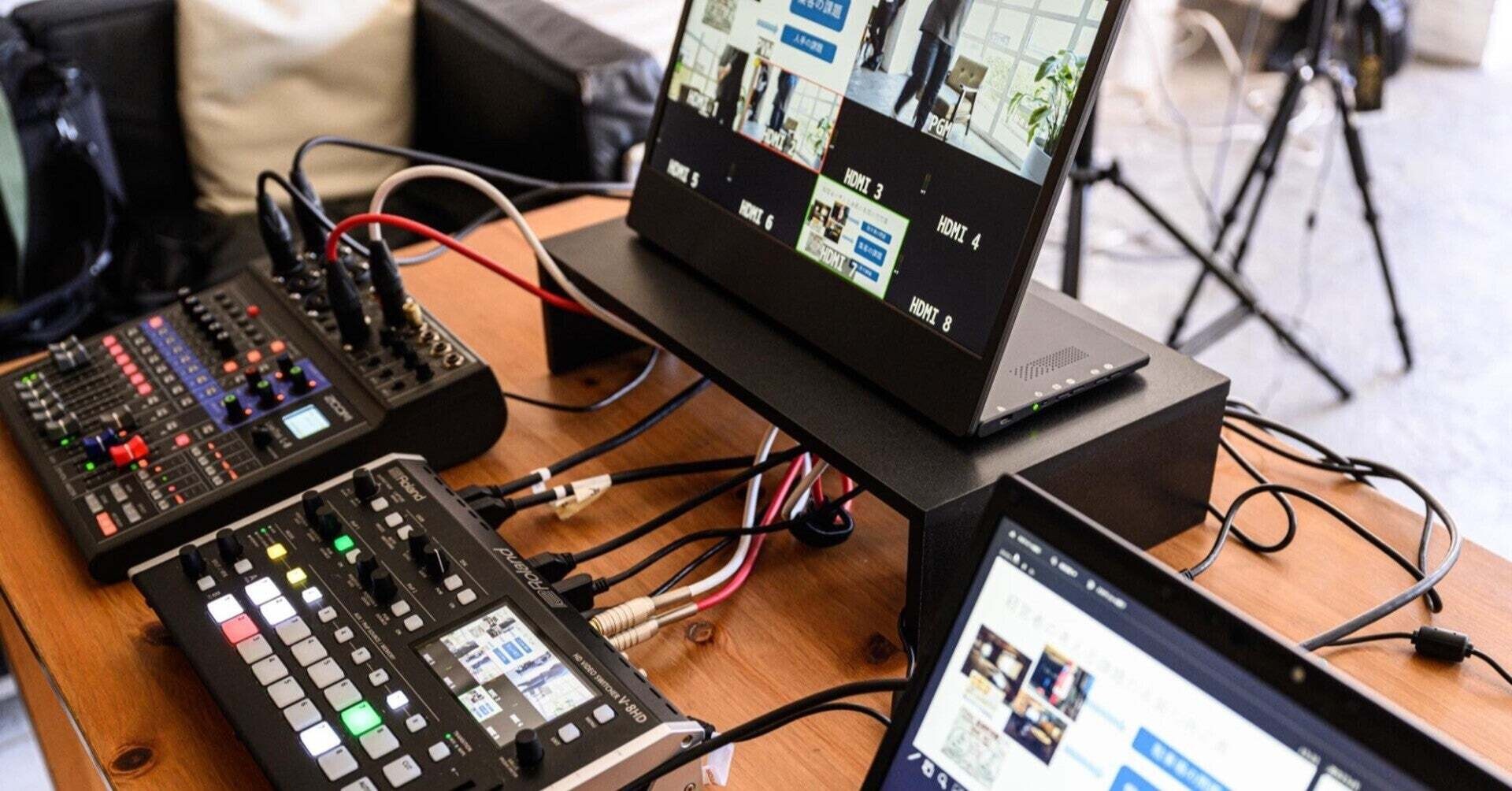
The outbreak of the novel coronavirus has led not only to live music concerts, theater performances, comedy shows, and fan meetings but also to various entertainment content that was previously conducted in person becoming available via live streaming, including corporate online seminars and fitness sessions.
Moreover, recently, hybrid events that combine online live streaming with in-person events have also become more common.
However, many people still might be unsure about the equipment needed to prepare for live streaming and the budget required to secure them. Therefore, at Zaiko, we interviewed Chizuko Morishita, the representative director of the equipment specialty store "Pro Equipment Dot Com", which handles numerous professional-grade video production and live streaming equipment.
In this second installment, we asked about the necessary equipment and budget for beginners starting live streaming, the differences between equipment needed for hybrid and no-audience streaming, as well as grants available for purchasing equipment.
If seeking a certain level of quality, consider a budget of around 300,000 yen
What kind of budget and equipment is necessary for beginners to start live streaming?
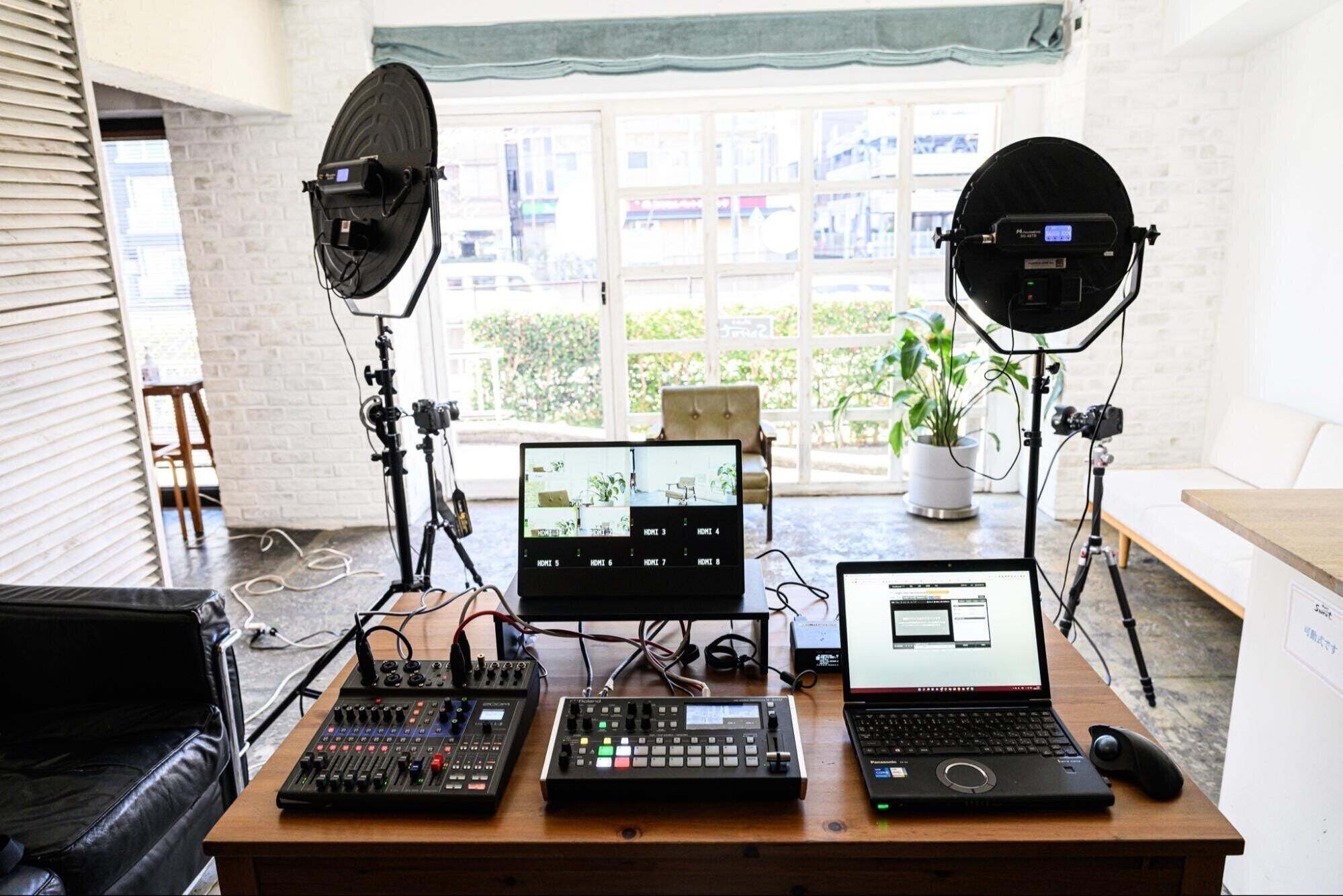
If you want to achieve a reasonable quality broadcast, you need at least a budget of around 300,000 yen. At first glance, this may seem like a high barrier, but a camera alone typically costs around 100,000 yen, plus you need microphones, a video mixer, a switcher, and if you want to adjust audio or apply effects, an audio interface among other necessary equipment.
If you are streaming alone from home, one camera will suffice; however, for a music live stream, you will want closer angles for each part, necessitating more cameras. Additionally, it can be uncomfortable for viewers to watch a single shot from afar for the entire duration.
If you can't prepare more than two cameras, using your smartphone is also a viable option. But if you shoot with a smartphone, it's advisable to at least get a microphone designed for smartphones.
That said, compared to a camera, a smartphone's camera might struggle to produce accurate brightness levels, resulting in overexposure or underexposure in places with a significant contrast, and it may be difficult to express rich color gradations. Therefore, if you are particular about the video quality, you naturally need a proper camera.
If you want to switch angles, a switcher will also be necessary.
So, even if you aim to gather equipment at relatively low prices, it's still a good idea to anticipate a minimum budget of around 300,000 yen.
In the case of a live house where microphones and lighting equipment are already set up, does that mean you don't need to prepare such equipment?
That's correct. However, the sound design for a live house and that for streaming are different. For example, the live sound engineer's job is to adjust the sound of the live performance to ensure that the people physically present at the venue can hear it. If you simply carry this over to the stream, it will create an unbalanced audio experience. Additionally, the atmosphere and excitement of the venue can be hard to convey.
Hence, it will also be necessary to make clever adjustments, like setting up air microphones to balance the sound while maintaining the live feel.
In the case of streamed music events, for example, if it's a large live house, it’s possible to bring in cranes to create various types of visuals, and if you spend a budget, the video quality can improve. Furthermore, if you're aiming to do a multi-camera live stream with around 3 to 4 ordinary cameras, you'll need a budget of about 1,000,000 yen when purchasing equipment.
However, if that budget is not available, it might be best to start with an easy to manage course of around 300,000 yen as previously mentioned.
Additionally, recently, there are methods where you can shoot wide visuals with one 4K camera and use a video mixer priced around 100,000 yen to cut and stream the footage.
A video mixer allows you to set presets so that with the press of a button, you can show a close-up of the vocals, which reduces the number of cameras you need and consequently, the related budget as well.
The same type of live streaming with camera work is possible for theater performances, but due to the more dynamic nature compared to music events, it might be a bit tough with just one cameraman.
Pro Equipment Dot Com offers package deals for live streaming equipment; which packages do you recommend?
From February of this year, we have been selling the 4K extraction equipment mentioned before. This allows those who cannot prepare many cameras to easily create footage that appears as if multiple cameras are being operated by a cameraman, so I would recommend it.
We also have various packages prepared for different purposes, so please check our website for more details.
There are various live streaming tools available now, such as OBS; which ones do you recommend?
OBS (Open Broadcaster Software), developed and maintained by the OBS Project, is free to use and can be very reassuring for beginners; however, trying to do too many complex things may lead to instability, causing the program to crash. Therefore, if you're planning to do paid streaming, a more stable hardware switcher is recommended.
If you have a high-spec PC and possess the necessary knowledge to manage it properly, using paid software like Wirecast or vMix can greatly expand your possibilities for expression.
That being said, this is limited to those with a certain level of computer knowledge, as such software can put a high load on the CPU and require attention to heat management for the PC itself.
Considering this, for beginners, using a hardware encoder might be better for stable streaming and easier operation.
Let's utilize grants for preparation
It was mentioned that having a budget of around 300,000 yen for live streaming from home is advisable, but for individuals, this could be a significant financial burden. What measures should they take in that case?
Acquiring live streaming equipment requires a substantial amount of funding, and I also struggled with how to procure it initially. After some research, I discovered that there are various grants available, and our company utilized the "Small Business Sustainability Grant."
This grant has a cap of 500,000 yen for the general category and 2,000,000 yen for the special category in the current fiscal year. The subsidy rate is two-thirds, so for instance, if you purchase equipment worth 750,000 yen, 500,000 yen will later be subsidized by the grant. (In some cases, if certain conditions for the special category are met, the subsidy rate may rise to three-quarters.)
This grant is available to sole proprietors and small businesses (for service sectors, those with five employees or fewer).
For medium-sized enterprises or larger, it’s possible to take advantage of grants like the "Manufacturing Grant" or "Business Reconstruction Grant," which subsidize larger amounts. Of course, sole proprietors and small businesses can also utilize them.
For the standard type of Manufacturing Grant, the cap is 12,500,000 yen, and for the standard type of Business Reconstruction Grant, the cap is 80,000,000 yen. (However, the cap varies based on the number of employees.) Both grants allow the inclusion of promotional activity costs alongside equipment introduction costs, although there are conditions attached.
When it comes to grant reviews, it’s important to think about a plan for acquiring equipment for online transition along with a plan for attracting viewers to your content.
Moreover, vague descriptions about the complete streaming system or just about a camera may lead to judgments that the camera's versatility is high and it may be used for other purposes, which does not create a good impression.
Therefore, when applying, it is beneficial to present that the equipment introduction is for a specific specialized usage, what capabilities will it provide, and how you plan to attract viewers, creating a business plan that clearly explains how you intend to generate income.
The more substantial the grant amount, the more thorough the business plan, detailed financial plan, feasibility, and rationale for profitability, as well as originality and innovation will be required.
For those who are doing this for the first time, crafting a business plan on your own can be quite challenging, so consider consulting a professional like a small and medium-sized enterprise consultant. You can also probably consult at a chamber of commerce free of charge. (You can consult even if you are not a member of the chamber.)
Additionally, a grant does not mean you receive money upfront to freely buy equipment, nor does it mean you can get reimbursed for equipment already purchased. (Some types of grants do allow preliminary actions, but this varies.) Only after the review is passed and the business plan is accepted, completion of the implementation, submission of a report, and completion of the report review will the grant amount be transferred. Until then, you need to prepare capital to cover the expenses upfront.
Recently, hybrid streaming has also increased, but does the equipment needed for this type of streaming differ from normal live streaming?
I've heard that there are many failures related to audio. Especially if there are remote guest speakers or videos to be played, the audio from the venue's microphone, the remote speaker's voice, and the video's audio need to be processed and separated accordingly for the venue's sound, the sound for the stream, and the sound sent to the remote speaker.
If you aim to manage audio processing for hybrid events, the number of audio-related equipment will need to double.
However, as the demand for hybrid streaming is likely to grow significantly, ensuring proper preparation of the equipment will be vital to avoid troubles.
https://mirasapo-plus.go.jp/subsidy/
https://zaiko.business/?utm_source=prokizai-2&utm_id=blog
More articles
電子チケットプラットフォーム「ZAIKO」、チケット購入から宿泊・交通・ツアー手配までを一元化し、シームレスなイベント体験の提供を開始
電子チケットプラットフォーム「ZAIKO」、チケット購入から宿泊・交通・ツアー手配までを一元化し、シームレスなイベント体験の提供を開始
ニュース

FUJI&SUN '26 artist lineup and timetable announced!
FUJI&SUN '26 artist lineup and timetable announced!
ニュース

Full lineup announced for the new urban music festival “81 MUSIC FESTIVAL”!
Full lineup announced for the new urban music festival “81 MUSIC FESTIVAL”!
ニュース